

Weekly Featured Local: Thyda’s Tacos
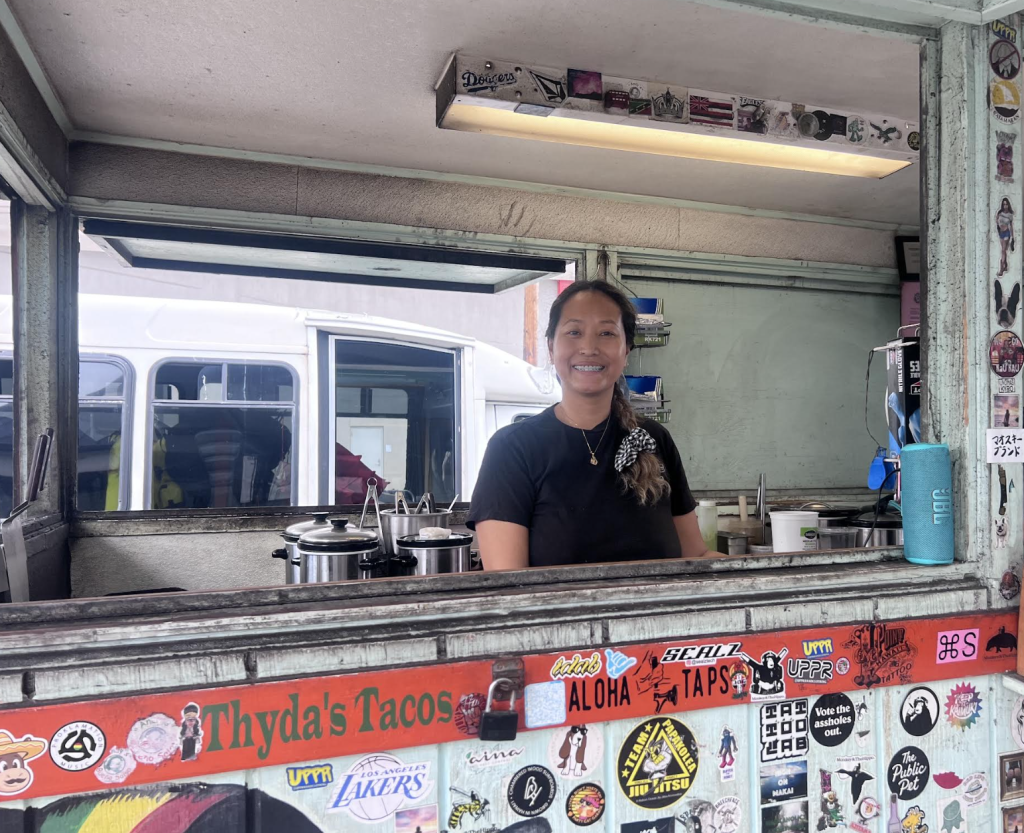
🌮 From LA to Kaka’ako: How Thyda’s Tacos Brought Authentic Flavor & Local Spirit to Hawai‘i When you think about the best meals you’ve ever had, they’re often more than just good food — they’re tied to people, places, and a feeling of connection. That’s exactly the kind of story behind Thyda’s Tacos, a beloved taco stand tucked away in the heart of Waikiki. I sat down with Thyda herself to hear how she turned a simple craving for California-style tacos into a thriving small business — one that’s become a staple for both locals and tourists alike. Starting with a Craving and a Dream Thyda’s journey began with a move from California to O‘ahu, alongside her then-boyfriend (now husband). “He wanted to start a food business — because everybody has to eat,” she laughed. “But he didn’t cook, so I said, ‘Okay, I’ll teach you how to make tacos.’” Growing up in Fresno and spending years in LA, Thyda was surrounded by authentic Mexican food. After relocating to Hawai‘i, she noticed a gap — there were fusion taco concepts around, but no straightforward, no-nonsense tacos like the ones back home. That’s when the idea for Thyda’s Tacos was born: a little piece of Cali flavor, served up with a whole lot of island heart. Overcoming “No” — Finding a Place in Kaka’ako As any small business owner on O‘ahu knows, one of the hardest parts isn’t making the product — it’s finding a place to sell it. For Thyda and her husband, getting their food truck on the road meant running into a lot of closed doors. “We started on the North Shore, and nobody wanted to let us park. The rent was insane,” she explained. “We almost gave up. We brought the truck down to Hawaii Kai, and I told my husband, ‘Let’s just forget it.’” But the islands have a way of connecting people when they need it most. A neighbor happened to see their truck parked outside and said, “Hey, I know a guy in Kaka’ako who might be able to help.” That guy connected them to Kanai, the owner of Discount Window Tint Hawaii, and the person who finally gave them a shot and the space. “He didn’t care that we didn’t have experience,” Thyda said. “He gave us a chance — and that’s all we needed.” Let the Food Speak for Itself Once they were set up in Kaka’ako, word spread fast. “People were just hungry for real Mexican food,” Thyda said. “Especially folks flying in from California — tacos are the first thing they want after a six-hour flight.” But locals were a key part of the equation too — especially the nearby construction crews who didn’t grow up eating burritos and tacos. Thyda quickly adapted. “My husband said, ‘We need to make rice bowls.’ They wanted rice, something they were familiar with. That’s how our rice bowls were born.” As for marketing? It’s been pretty organic. “We’re on Google Maps, but mostly, it’s been word of mouth. The food speaks for itself.” (I can vouch for that. I had their burrito — hands down the best I’ve had since moving to O‘ahu.) The Power of Local Collaboration When I asked Thyda about the value of partnering with other local businesses or tour operators, her answer was immediate: “It makes a huge difference. Hawai‘i is all about community. Locals support local. So if another well-known local business shares your name, it brings so much more exposure.” That’s something I’ve seen firsthand, too — whether you’re running a food truck, a kayak tour, or a small retail business, your network is your foundation. People want to support folks who are rooted in the islands and contributing to the ‘ohana of local business. Aloha in Action Thyda’s story is a reminder that building a business in Hawai‘i isn’t just about strategy or branding — it’s about heart. It’s about the people who say yes when others say no. It’s about making food for your neighbors, not just your customers. And it’s about adapting, giving back, and doing things with aloha. As I continue building my own local business — a self-guided clear kayak tour based right here on O‘ahu — I’m inspired by stories like Thyda’s. They show what’s possible when you stay true to your roots, stay flexible, and stay connected. 🌮 Go Try Thyda’s Tacos If you’re in Kaka’ako, and looking for some ono grindz, don’t miss Thyda’s Tacos. Whether you’re fresh off the plane from LA or born and raised in the 808, you’ll find something to love — from the tacos to the rice bowls, and the awesome people behind the counter. Find them on Google Maps: Thyda’s Tacos, Queen St, Kaka’ako Follow them on social media: Instagram, Facebook And always: support local, eat well, and spread aloha.
Weekly Featured Local: Vicki from Honolulu Discount Car Rental
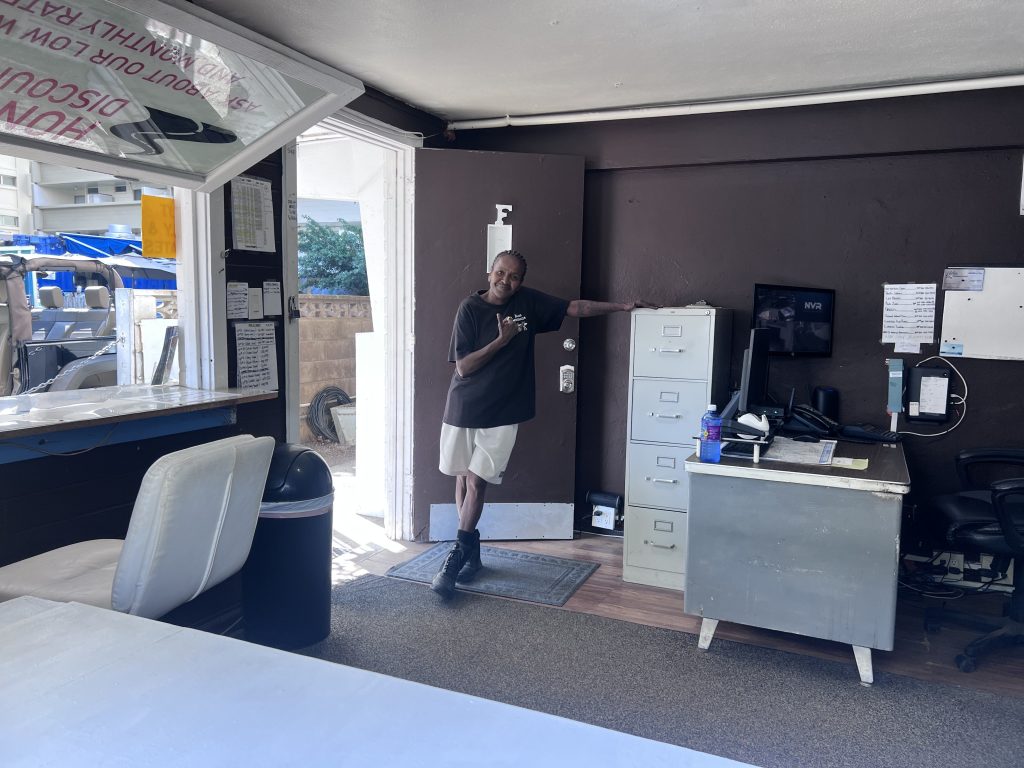
Vicki from VIP Car Rental (Now Honolulu Discount Cars) There’s local, and then there’s Vicki local. If you’ve ever rented a car from VIP Car Rental — now rebranded as Honolulu Discount Cars — there’s a good chance you’ve met Vicki. And if you’ve met Vicki, you already know: this is someone who leads with aloha, loyalty, and genuine care for every single customer who walks through her door. I first met Vicki under less-than-glamorous circumstances. I needed a bathroom. She had one. She said yes — no questions, no attitude, no nonsense. Just kindness. That alone puts her miles ahead of most businesses on the island. But it turns out, that moment is just a tiny window into who she is. “I was taught by the best” Vicki’s been in the car rental game for over 30 years. She got her start at VIP, learning everything from a manager named Mr. Nagi — who, today, is not just her boss but her best friend. After a break from the industry, she got the call a couple years ago to come back and help rebuild after COVID wiped out three of their rental lots. And like many small local businesses, they’re still bouncing back — slowly but surely. “We’re competing with all the big dogs, but guess what? God is good. We’re still pushing forward.” These days, the team has rebranded to Honolulu Discount Cars, upgraded their offerings, and rebuilt with heart. According to Vicki, business is up 40% — but there’s still work to be done. Local Knows Best When I asked what visitors tend to miss out on when they come to Oʻahu, Vicki didn’t even hesitate: “Get out of the city. This is not the island. Take a convertible — do your own exploring. Don’t just follow someone else’s tour schedule.” She’s all about the real island — not just the brochures, but the spots you only hear about if you know someone who knows someone. And Vicki is that someone. Every customer who rents from her gets more than just keys and paperwork — they get Vicki’s List: a curated guide to her favorite places on the island, complete with personal recommendations and insider tips. She even makes it a point to personally visit every place she recommends. “I know their experience is gonna be great — because I know mine was.” The Aloha Difference Maybe that’s the secret sauce — Vicki cares. She walks customers through the rental, hands them a map, gives them her itinerary, and treats them like guests, not transactions. She’s old-school in the best way — human-first, heart-led. And in a world where a lot of people are just trying to get through the day, Vicki is out here making people feel welcome — whether they’re picking up a cherry red Camaro or just need to use the bathroom. Mahalo nui loa, Vicki, for being a reminder of what local business is really about. If you’re ever looking to explore the island on your own terms, hit up Honolulu Discount Cars. Ask for the bumblebee — or just tell them Vicki sent you. Stay tuned for next week’s Featured Local, and in the meantime — support local, skip the big dogs, and get out of the city.
Community Voices: Natasha Davies on Teaching, Hospitality & Life in Oʻahu

In this week’s Community Voices feature, meet Natasha Davies, a Waldorf educator and hospitality worker who has returned to her Big Island roots by planting new ones on Oʻahu’s west side.
Weekly Feature: Meet Local Artist Ana Sumpter – A Journey of Art and Inspiration

This week, we’re excited to feature Ana Sumpter, a talented artist and Army veteran whose vibrant oil paintings and sustainable creations are inspired by Oahu’s natural beauty and her deep-rooted faith. Her journey from serving 20 years in the military to pursuing her dream of becoming a professional artist is nothing short of inspiring. Here’s an inside look at her story, her artistic process, and what makes her work truly special. From Soldier to Artist Ana’s passion for art started early in life. She recalls spending her childhood sketching and drawing, but life circumstances eventually put her artistic dreams on hold. After joining the Army at 18, her focus shifted entirely to serving her country. Now retired, Ana is finally embracing her lifelong dream of becoming a painter. “After retiring from the Army after serving 20 years, I was ready to pursue my dream of being a painter,” Ana shared. “I drew throughout my childhood but gave it up due to life circumstances. Once I joined the Army at 18, that became my priority, and I stopped pursuing art entirely.” Her journey is a testament to the idea that it’s never too late to follow your passion. The Island as a Muse Living on Oahu has had a profound impact on Ana’s art. The island’s natural beauty serves as a muse for her oil paintings, but her faith plays an even larger role in shaping her work. “My art is influenced by the beauty seen in nature here in Oahu. But my faith is a more significant influence on my art,” she says. A Personal Touch When asked about her favorite project, Ana recalls a special commission she completed for a friend: a detailed oil painting of a beloved dog. “It was so much more rewarding to paint for someone else and see their reaction to the painting,” Ana explains. Her personal connection to her subjects adds a unique depth and authenticity to her work, making each piece truly one of a kind. Sustainability in Art Beyond her oil paintings, Ana is passionate about sustainability. She often uses recycled or repurposed materials in her art, even exploring thought-provoking themes like consumerism and the wasteful nature of holidays. “I strive to use recycled materials or re-purpose items in new ways,” Ana says. Her commitment to sustainability reflects her respect for the environment and aligns with the values of many Oahu residents. Advice for Visitors: Unplug and Explore For those seeking inspiration on Oahu, Ana’s advice is simple: put down your phone and take in the island’s natural beauty without distractions. “I often see people constantly stimulated, whether listening to music, watching videos, or just being busy on their phones,” she says. “Try being in silence and soaking in the beauty of the island.” One of Ana’s favorite spots is kayaking from Lanikai Beach to Mokulua, also known as the Mokes—a hidden gem she highly recommends. What’s Next for Ana Ana is currently working toward her Bachelor of Fine Arts (BFA) degree in oil painting at the University of Hawaii at Manoa. Her upcoming BFA exhibition in Spring 2025 promises to showcase her growth as an artist and the culmination of her hard work and dedication. You can explore more of Ana’s work and follow her artistic journey on her Instagram: @AnaSumpterArt. Stay tuned for updates on her exhibition and more insights into her creative process. Ana’s story is a reminder of the power of resilience, creativity, and the beauty of embracing a new chapter. Whether you’re a local or a visitor, we hope her story inspires you to explore the island, disconnect from distractions, and maybe even try something new.
Embracing Hawaiian Culture: A Conversation with Nue, Local Hawaiian Culture and Surfing Teacher

In Hawaii, where American capitalism meets traditional Hawaiian values, the duality can be both enriching and challenging. For Nue, a local Hawaiian culture teacher and surf instructor, navigating this intersection has been a lifelong journey that ultimately inspired him to share his knowledge and passion with others. In his classes, Nue explores what it means to be Hawaiian, emphasizing values of aloha, mindfulness, and environmental respect — principles that have shaped Hawaii’s history and still hold immense relevance today. What Inspired Nue to Teach Hawaiian Culture and Surfing Nue’s path to teaching Hawaiian culture stemmed from his desire to clarify the sometimes confusing blend of cultures and industries in Hawaii. “The duality of Hawaiian culture alongside American capitalism can be difficult to understand,” he shares. “We have both an Americanized Hawaii and a traditional Hawaiian culture. Tourism and hospitality are major industries here, but they don’t always respect local traditions, which leaves many residents disillusioned.” Growing up as a naturally inquisitive child, Nue was intrigued by the complex blend of traditional Hawaiian values and modern influences in his community. This curiosity, combined with a deep sense of duty, eventually led him to enlist in the Army, where he traveled extensively and gained a broader understanding of cultural diversity and complexities worldwide. Today, Nue is a respected figure, known both within Hawaiian and other communities as a proud Kanaka Maoli (Native Hawaiian) with a commitment to cultural preservation. Realizing the importance of bridging cultural divides, Nue felt a personal responsibility to help visitors appreciate and understand Hawaii authentically. “I wanted to be there for tourists, to help them understand what is right when they come to Hawaii,” he explains. This commitment inspired him to become both a Hawaiian culture professor and a surf instructor, roles that allow him to share his insights directly with visitors. For Nue, teaching Hawaiian culture and surfing is about fostering respect for Hawaii’s land and people and helping others connect with its true spirit. Core Values: The Spirit of Aloha and Respect for the Land In his classes, Nue teaches that aloha is far more than a greeting; it’s a life philosophy. “Aloha isn’t just a hello or goodbye. It’s the presence of life and a greeting of well-being,” Nue explains. He describes aloha as an expression of respect, appreciation, and mindfulness, values that are deeply rooted in Hawaiian culture. This concept extends to aloha ʻāina, or love for the land, which emphasizes caring for natural resources and living in harmony with the environment. Nue also underscores that paradise already exists in Hawaii’s natural beauty, without the need for extensive development. “Our ancestors cared for the land and ocean, passing down a legacy of preservation that contrasts with modern efforts to build artificial ‘paradises’ for tourists,” he says. For Nue, instilling these values in his students is essential, as it fosters a respect that goes beyond tourism and contributes to a sustainable future for Hawaii. How Hawaiian Culture Impacts Students’ Lives Nue’s classes offer more than cultural knowledge; they provide students with life skills, confidence, and a sense of global community. “Teaching Hawaiian culture builds mindfulness and respect, not only for the land but for each other,” Nue says. He observes that many students who come from busy urban environments find peace in the simplicity of Hawaiian culture, which contrasts with the fast-paced, digital lives they often lead. His vision is to build an “Aloha Army,” a global family that embodies the spirit of aloha and stands together as an ʻohana (family). “In a world often divided by politics and conflict, reconnecting with Hawaiian values reminds us of our shared humanity and our connection to the Earth,” Nue explains. He believes his classes can help students reconnect spiritually and escape the distractions of modern life, grounding them in a reality where mindfulness and community take precedence over virtual interactions. Surfing: A Cultural Practice Rooted in Tradition One of the unique activities Nue offers is surfing, which he sees as a gateway to understanding Hawaiian culture. “Surfing wasn’t just recreation for our ancestors. It was part of a lifestyle made possible by sustainable agricultural practices,” he says. Hawaiians historically managed their resources so effectively that they had ample time for recreational activities, a fact that astonished early visitors. Surfing, according to Nue, serves as a way to teach students about aloha and the importance of the ocean as a teacher. “Our connection to the ocean has been cultivated over hundreds of generations. Through surfing, students learn confidence, self-empowerment, and respect for the elements,” Nue says. He emphasizes that in a world largely covered by water, understanding and respecting the ocean is crucial. Surfing thus becomes a practical way for his students to embody Hawaiian values, building a relationship with the ocean that goes beyond sport. How the Wider Community Benefits from Learning Hawaiian Culture Nue believes that embracing Hawaiian culture can have a ripple effect, benefiting both individuals and communities by fostering mindfulness and resourcefulness. “Hawaiian culture is simple but innovative, as shown by how our ancestors adapted to challenges without sacrificing respect for the land,” he says. Nue points to Hawaiian advancements, such as early adoption of electricity and colored photography, as examples of innovation that complemented traditional values rather than replaced them. In a time of global climate change, Nue sees Hawaiian culture as a model of adaptability and respect for the natural world. “Our ancestors found ways to live in harmony with nature, rather than constantly seeking comfort and convenience,” he reflects. By learning from Hawaiian culture, Nue believes that communities worldwide can adopt a more sustainable approach to life, moving away from a culture of excess toward one of balance. Final Thoughts For Nue, teaching Hawaiian culture and surfing is about more than imparting knowledge; it’s about instilling values that can lead to a more mindful, connected world. His students walk away with more than just surf skills; they carry a piece of Hawaii with them — an understanding of aloha, a respect for